WHY EVERYTHING STILL FEELS EXPENSIVE
INFLATION IS FALLING. SO WHY DOESN’T ANYTHING FEEL CHEAPER?
See why lower inflation doesn’t necessarily mean lower prices—and how the economic forces affecting everyday life connect.
44-page PDF in English · Instant download · One-time payment
Lower Inflation Doesn’t Mean Lower Prices
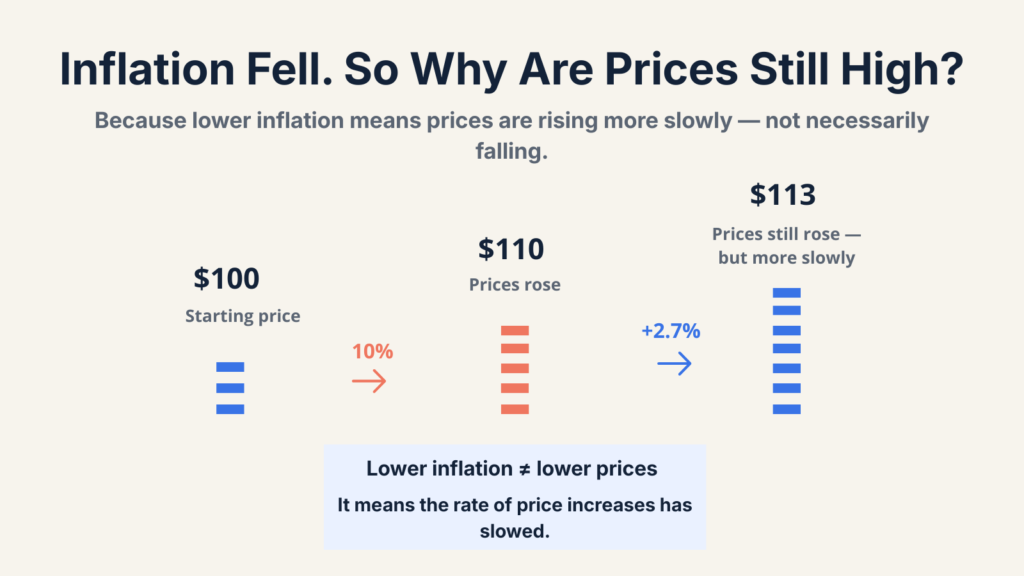
Inflation measures how quickly prices are changing. When inflation falls, prices may still be rising—just more slowly than before.
That’s why groceries, housing and other everyday costs can remain high even when inflation headlines sound more encouraging.
Inflation Is Only One Part of the Story
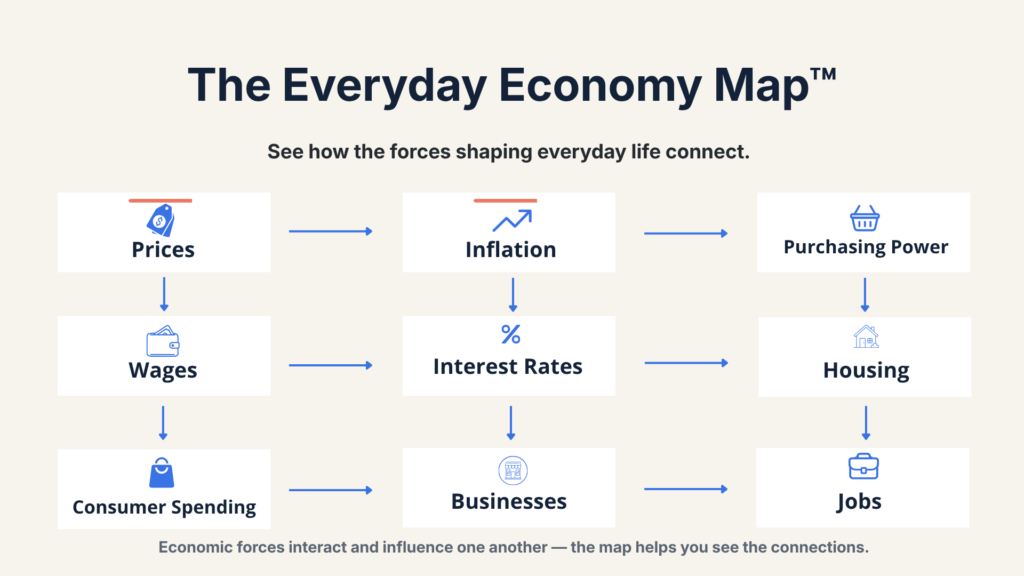
Prices, wages, interest rates, housing, spending, businesses and jobs influence one another. A change in one part of the economy can affect several others.
That’s why a single headline or economic number rarely explains how everyday life actually feels.
One Simple Example Makes It Click
Imagine something costs $100. After a 10% increase, it costs $110. If prices then rise by another 3%, it reaches about $113—not $103 and not $100.
Inflation slowed, but the earlier price increase remained. The guide uses simple visuals like this to explain why everyday costs can still feel high—and how the wider economy connects.
What You’ll Understand
Prices & Inflation
Why inflation can fall while prices remain high — and what that means for everyday costs.
Purchasing Power & Wages
How rising prices and changing wages affect what your money can actually buy.
Interest Rates & Housing
Why interest rates influence borrowing costs, housing affordability and the wider economy.
Consumer Spending
How changes in prices, wages and interest rates can influence what households spend.
Businesses & Prices
Why businesses may raise prices when their costs change — and how those decisions affect consumers.
Jobs & Employment
How changes across the economy can influence business decisions, hiring and employment.
What’s Included in the 44-Page Guide
60-Second Summary
A quick recap of the key ideas for easy reference after reading.
44-Page Visual Guide
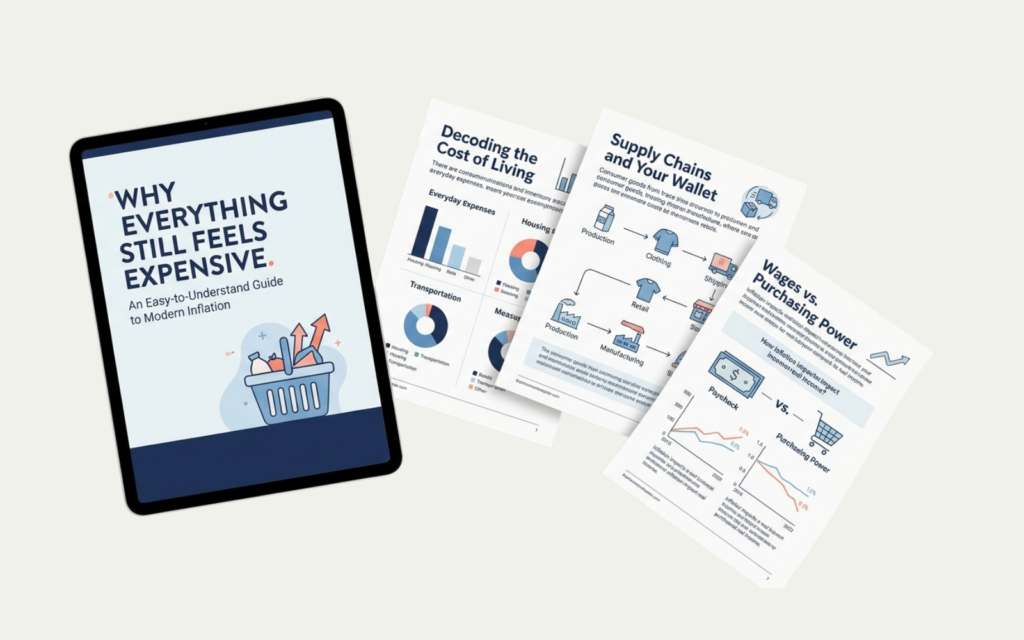
A clear, beginner-friendly explanation of the economic forces behind everyday prices and the cost of living.
The Everyday Economy Map™
A visual framework connecting prices, inflation, purchasing power, wages, interest rates, housing, consumer spending, businesses and jobs.
Everyday Economic Examples
Simple examples showing how economic changes can appear in groceries, housing and other everyday costs.
“What Happens When...?” Visual Scenarios
Visual scenarios that show how changes in one part of the economy can affect other parts.
Plain-English Economics Glossary
Key economic terms explained in simple language, without unnecessary jargon.
Ready to Understand Why Everything Still Feels Expensive?
Get the complete 44-page visual guide and see how inflation, prices, wages, purchasing power, interest rates, housing, spending, businesses and jobs fit together.
$12
One-time payment · 44-page PDF in English · Instant download
Frequently Asked Questions
No. This guide is for educational purposes only. It explains economic concepts and how they connect. It does not provide financial, investment, trading, tax or legal advice.
No. The guide was created for beginners and uses plain English, visual examples and a simple glossary. No previous knowledge of economics is required.
It is a 44-page digital PDF in English. You can download it and read it on a computer, tablet or phone.
Immediately after payment, you’ll receive access to download the PDF.
No. You pay $12 once. There are no monthly fees or recurring charges.
© 2026 Coinspif